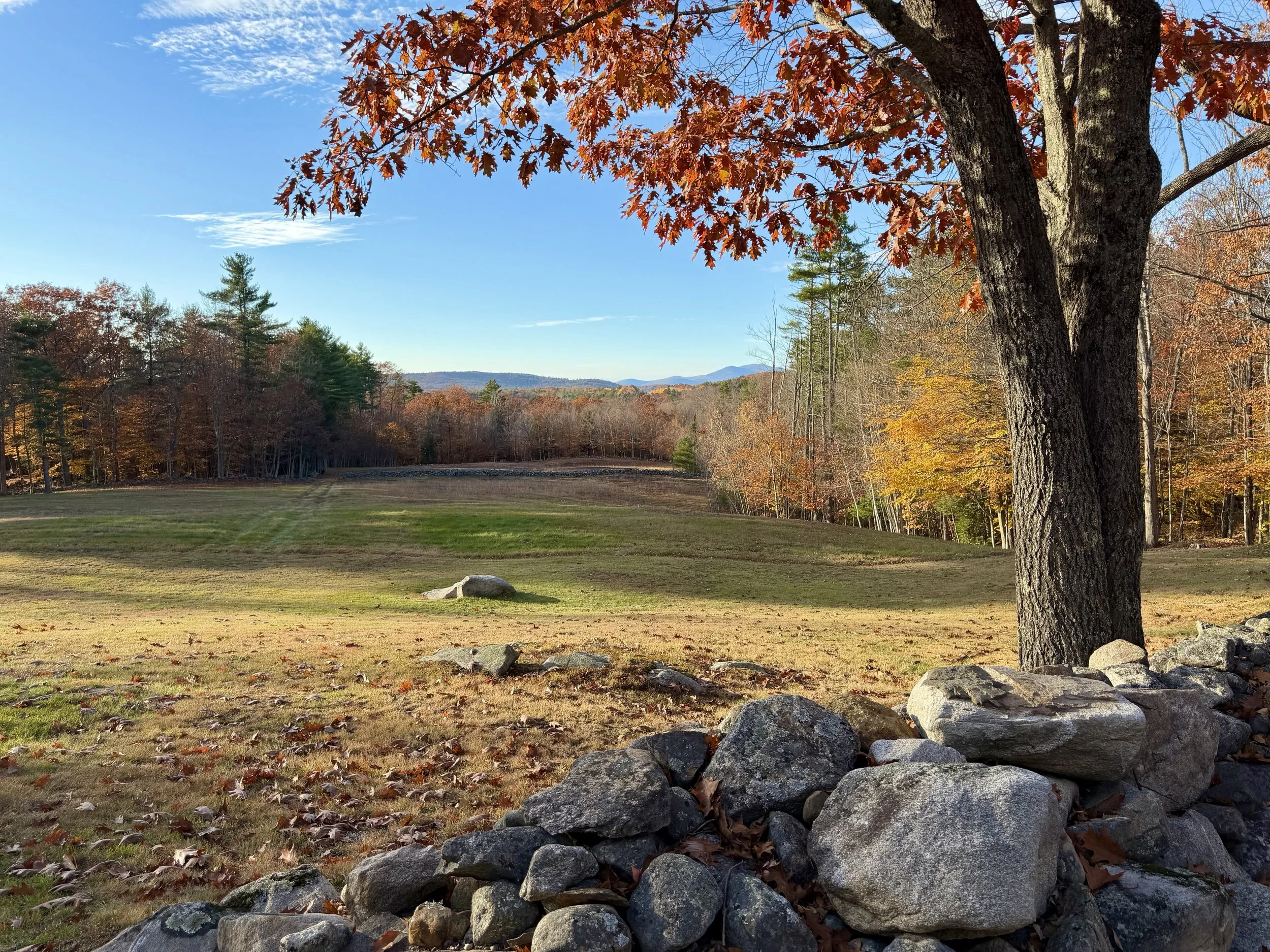
Last month we promised to tell you more about the Association’s efforts to help conserve North Wolfeboro’s rural, historic, and scenic lands. This issue is mostly about that, so here goes. And thanks for reading!
A Landscape Worth Keeping
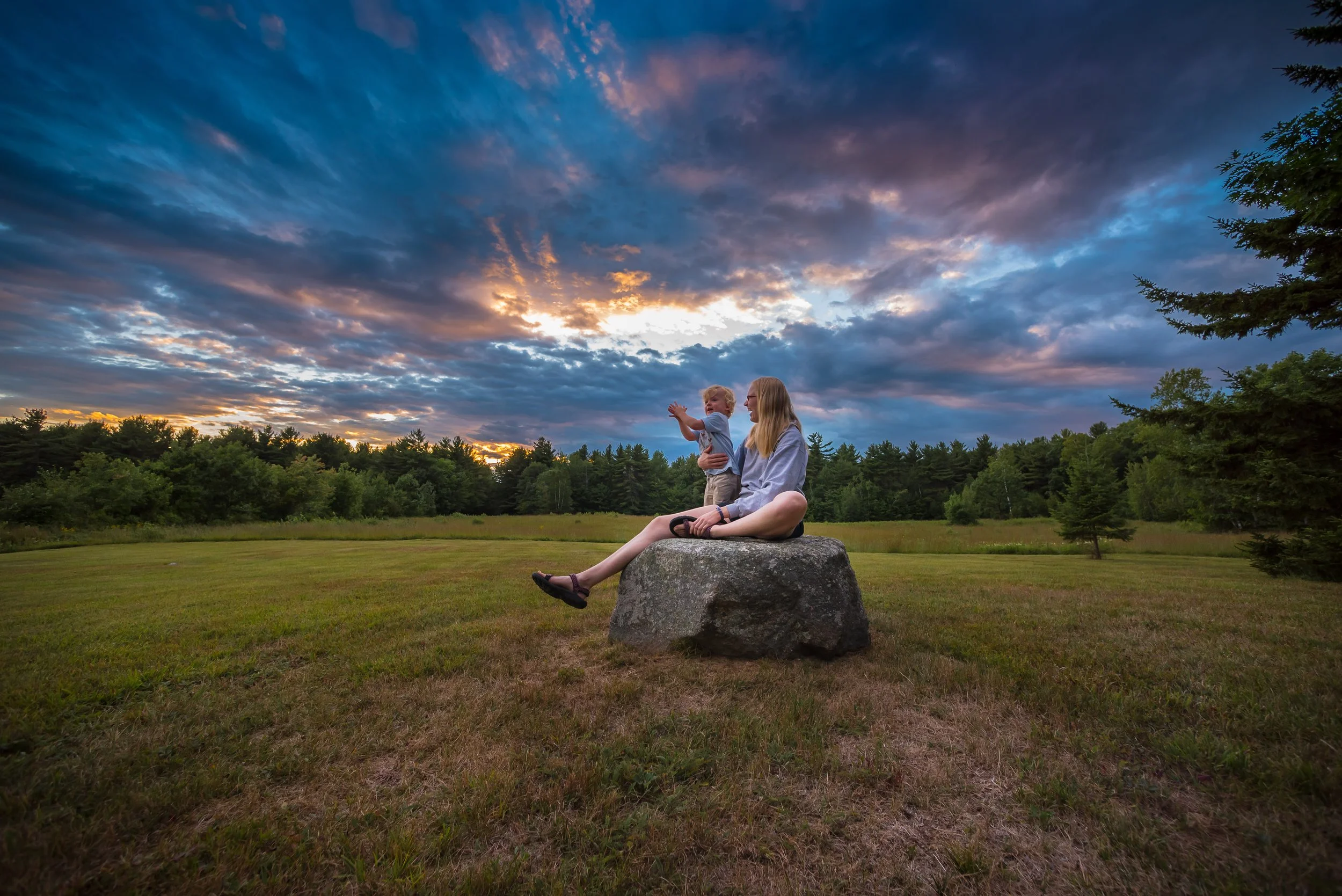
North Wolfeboro’s farm and forest lands, streams, wetlands, and beautiful views form a connected landscape that this community has long recognized as special.
Of the Town’s 14 designated scenic roads, 11 are here in the North Wolfeboro area. The Town and local, regional, and statewide land trusts have permanently conserved some 1,600 acres in our area, protecting watersheds, wildlife habitat, forest and farmland, and the remnants of early settlement. This complements the Cotton Mountain Historic-Agricultural District, which the Town adopted to preserve forest, field, and open space and protect our rural character.
Conserved land does the most good when it is connected. Our goal is to keep North Wolfeboro working as a whole landscape rather than a scattering of separate preserves. That means linking existing conserved parcels and protecting the farm, forest, and wetland properties that remain.
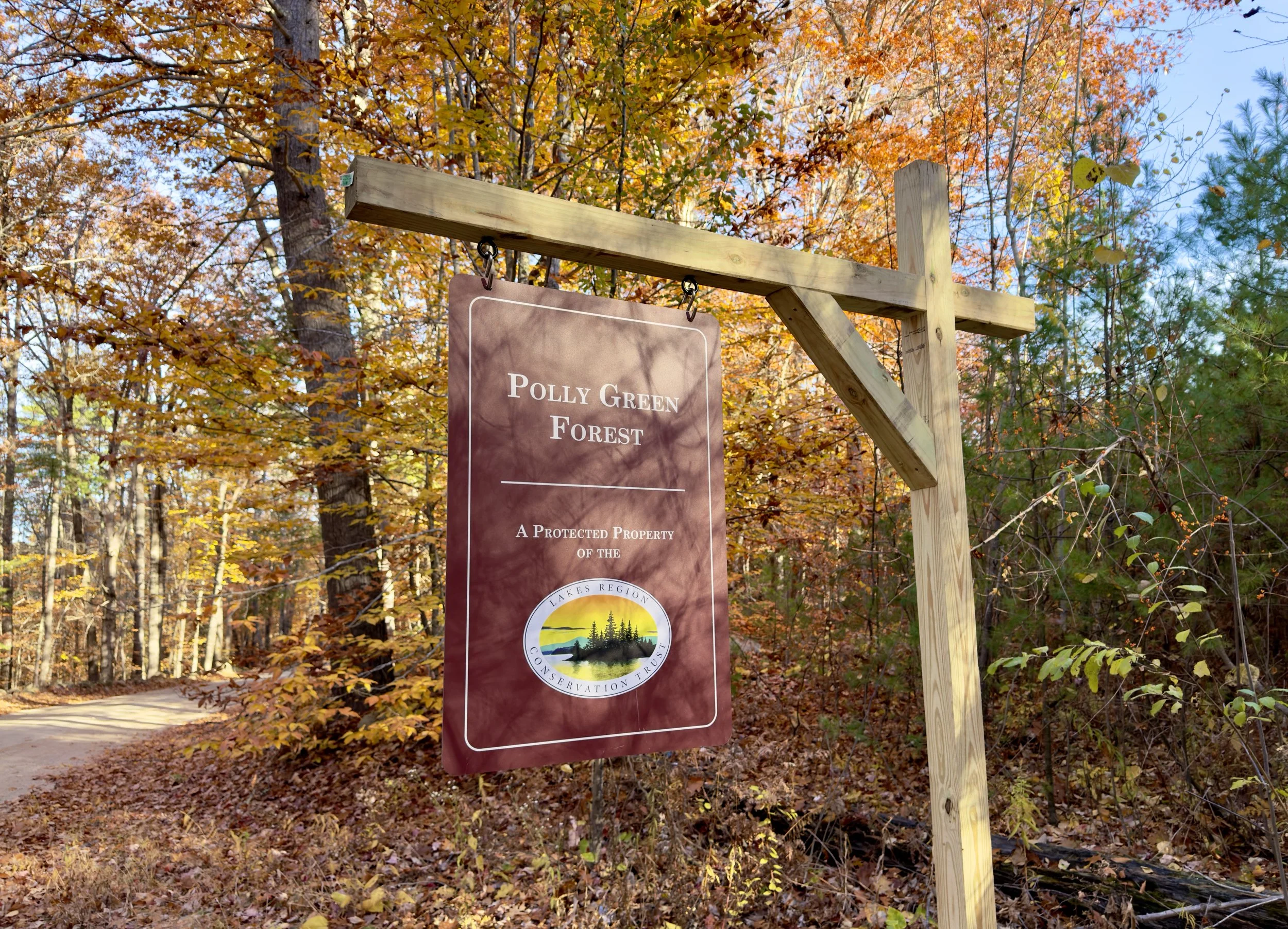
Polly Green Forest
How the NWAA Can Help
The NWAA works to foster permanent conservation of North Wolfeboro’s natural, scenic, rural, and historic landscape.
We can’t conserve anyone’s land ourselves, and we wouldn’t want to. Whether land is conserved is always the owner’s decision. What we can do is connect interested landowners with the right organizations to have a conversation.
Several land trusts work with landowners in and around our area, each with its own focus and approach:
We have had a chance to meet with most of these organizations. And, you may remember Jill Eldredge, Executive Director of Moose Mountains Regional Greenways, who spoke at our annual meeting in August.
If you are wondering which organization is the best fit for your land and your goals, we’re glad to chat with you and make introductions. There’s no obligation, and a first conversation doesn’t commit you to anything. Just drop us an email.
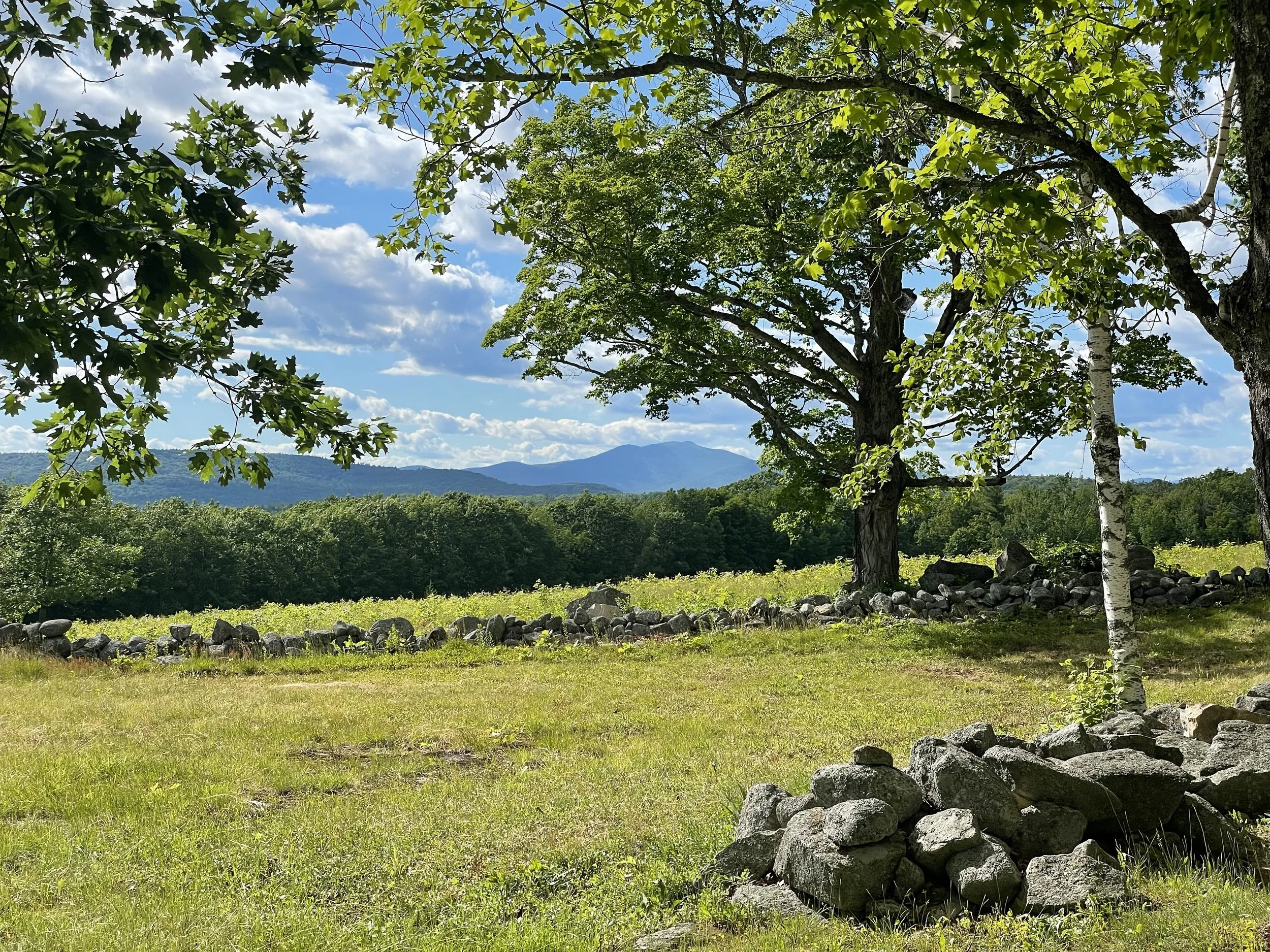
Conservation Easements 101
One of the most common tools for permanently conserving land is a conservation easement. Here is a short primer, based on the helpful overview on the Moose Mountains Regional Greenways website (link below).
What it is. A conservation easement is a voluntary agreement between a landowner and a land trust (or a town, state, or federal agency) that permanently limits how the property can be used, in order to protect its natural resources. What is limited varies from one easement to another.
What you still own. You keep the land. You can still live on it, sell it, or pass it on to your heirs. Typically the easement limits development and mineral rights, while farming and forestry generally remain in place. Easements can also carve out “excluded areas,” such as a house site, so that your entire property doesn’t have to be conserved.
Farming is compatible. Conserved land can still be farmed, and farm operations can expand, for example by adding barns or greenhouses.
It’s permanent. The terms bind all future owners. That’s why land trusts are involved: someone has to be around to uphold the agreement forever. The land trust documents the land’s condition when the easement is signed, visits each year to monitor it, and gets in touch with new owners if the property changes hands.
It’s not the same as Current Use. Current Use is a property tax program, not a form of protection. It can be ended at any time, subject to a land use change tax penalty. A conservation easement is permanent and legally binding.
What it takes. Easements involve an appraisal, a survey, legal and title work, and some staff time at the land trust. Who pays for what varies, and some funding assistance is available in certain cases. A simple project may be done in under a year, while a complex one can take several. The tax implications depend on the specifics, so be sure to talk with the land trust, an attorney, and a tax professional. Speaking with more than one land trust early on is also a good idea.
We saw what this looks like at our annual meeting. Moody Mountain Farm is surrounded by hundreds of acres protected by conservation easements donated by Cecily Clark. Thanks again to Perrin and Julie Long for hosting us in such a beautiful setting.
For more, see Moose Mountains Regional Greenways’ Conservation Easements 101.